





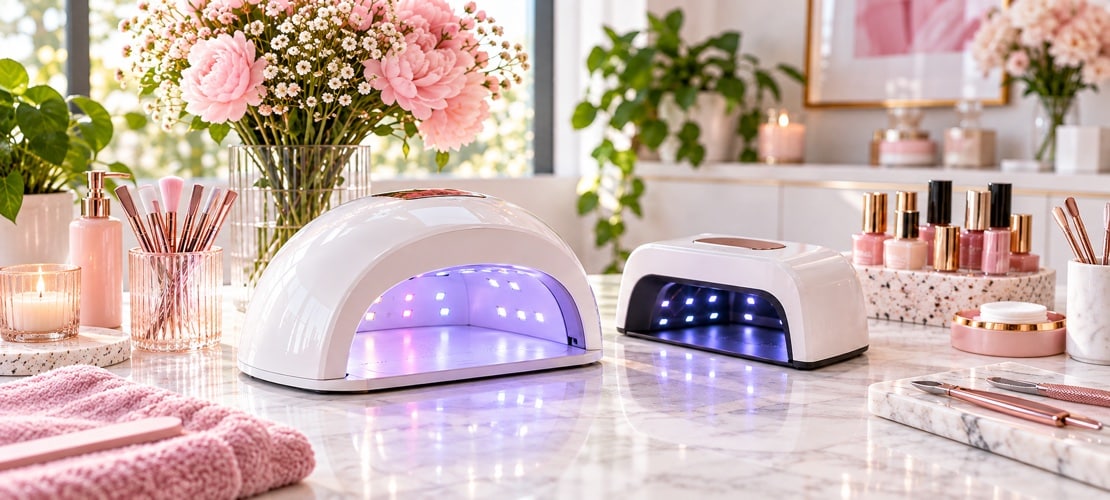
When you start learning gel polish, choosing a lamp can seem like a simple comparison: UV or LED? In practice, the most useful question is which lamp is approved for the gel system you plan to use?
The original Next Step Beauty lesson introduced the difference between these lamp types. This guide expands that topic into a practical checklist for selecting and using your equipment.
UV and LED describe different things
UV means ultraviolet: a type of light. LED means light-emitting diode: a light source. Nail lamps described as LED can emit ultraviolet light, so “LED” does not mean “UV-free”.
In everyday salon language, “UV lamp” often refers to an older fluorescent-bulb model, while “LED lamp” usually refers to a diode-based model. Those labels alone do not tell you whether a lamp will cure your particular gel correctly.
Compare the system, not just the label
| Question | What to check |
|---|---|
| Will it work with my gel? | The gel manufacturer’s approved lamp model and application instructions. |
| How long should I cure? | The specified time or preset for each product and layer. |
| Does higher wattage mean a better cure? | Wattage alone cannot establish compatibility. Follow the tested system. |
| What maintenance is needed? | Cleaning, servicing and any bulb replacement instructions for that model. |
| Where should the hand sit? | The lamp’s placement guidance, including any separate thumb instructions. |
Why the correct lamp matters
Gel curing is part of a chemical process, not simply drying polish. A product’s appearance should not replace the manufacturer’s instructions for confirming how it must be applied and cured.
The British Association of Dermatologists warns that insufficient curing and skin contact with uncured products can increase allergy risk. It advises using the recommended lamp. This is why mixing an unfamiliar gel and lamp based only on their labels is a poor starting point.
As a product-specific example, CND’s SHELLAC instructions specify a CND lamp and a particular preset. Follow the instructions for your own system rather than copying another brand’s timings.
A buying checklist for nail students
- Choose your training and product system first. Check whether your course specifies equipment before buying a separate lamp.
- Find the exact model. Look for written compatibility guidance from the gel manufacturer, rather than relying only on a marketplace description.
- Check ongoing support. Keep the instructions, warranty details and supplier contact information together.
- Plan your workspace. Your lamp should sit securely where you can place the hand correctly without twisting or crowding the desk.
If the finish is not right
Wrinkling, lifting or an unexpected finish is a reason to review the whole application process. Check preparation, layer thickness, product instructions and hand position as well as the lamp.
Do not invent longer curing times to compensate for an unverified combination. Pause the service and seek guidance from your tutor or product supplier. If a client develops irritation, stop using the product and advise them to seek medical advice.
Common lamp questions
Can one lamp cure every gel polish?
Do not assume that it can. Establish compatibility with each product manufacturer before using a different system.
Does LED mean the lamp is UV-free?
No. LED describes the light source; UV describes the light. Check the device specifications rather than treating the words as opposites.
Can I copy the curing time from another brand?
No. Use the instructions for the exact product, lamp and application stage.
Make equipment knowledge part of your training
Understanding your lamp is as important as achieving a neat colour application. If you are comparing courses, our guide to choosing an online nail course will help you check the practical teaching and support before enrolling.