About Next Step Beauty
Online nail and beauty training since 2008. More than 100,000 students across 65 countries and territories have trained with us. Here is who we are, who teaches you, and how the courses work.
You Are Probably Here For One Of Four Reasons
People arrive at this page from very different places. See which one sounds like you — it changes where you should start.
You have never done any of this before
No experience, no kit, no idea which course is the right one. That is the most common place to start, not the hardest. You are not behind.
You already work in beauty and want to add a treatment
You know the trade. You want one new skill on the menu without sitting through the basics again, and you want to know what it takes before you offer it.
You have done something else for years
Maybe for a long time, and you want to build something of your own around the life you already have. The question is not whether you are too late. It is how much time you can give it each week.
You can already do it, you just want it recognised
Self-taught, or trained years ago and never assessed. You want someone qualified to look at your work, tell you the truth and put a diploma behind it.
Changing Lives Through Beauty EducationThat is the strapline. What it means in practice is that where you live, what you earn and what you did before should not decide whether you can learn a skilled trade.
Our mission
We believe in empowering women to increase their self-confidence, sense of worth, achievement & wealth through structured, positive, professional and creativity-focused beauty education, supporting women throughout their career.
We believe that all women should have an equal opportunity to learn regardless of financial status or physical location whilst building meaningful relationships which last a lifetime.
Our promise
Beauty education empowers women’s success.
Our Key Numbers
- 2008Teaching Since
- 100,000+Students
- 65Countries and territories
- 1,000,000Courses sold
- 1,345Reviews, rated Excellent
Our Values
Three of them, and they describe how a course is meant to work, in order. They are also how we judge whether we have done our job.
Through the use of our innovative technology we inspire women to learn new skills not bound by geography or social status
We Inspire Women To LearnBy connecting like-minded women of any age through their passion of beauty, we enable the increase of their self-confidence, pride, success & financial wealth
We Enable Women To DevelopWe empower women to achieve their goals through structured, positive, professional and creativity-focused beauty education
We Empower Women To Achieve
What Those Values Look Like In Practice
Values are easy to write and hard to prove. Here is each one tied to something we actually do, so you can hold us to it.
We would rather you got it right than got it finished
Assessed work can be resubmitted as many times as you need. No cap, no extra fee, no quiet pass to move you along.
Your materials should not expire
Nail courses come with lifetime access. Come back in five years to check something before a client and it is still there.
The person who teaches it marks it
Victoria demonstrates the techniques in the nail course videos herself, and is involved with the tutor team in marking the work that comes back.
We tell you what a diploma does not do
Accreditation is not a licence and it is not insurance. We would rather say so here than have you find out after you have paid.
The business side is not an upsell
Business training is included with every course, because knowing the treatment and knowing how to charge for it are two different problems.
Cost should not decide who learns
Pay in 3 interest-free instalments with Klarna, PayPal or Clearpay, and a 14-day money-back guarantee if it is not what you expected.
How You Learn A Practical Skill Online
It is a fair question and it deserves a real answer rather than a reassurance. You cannot learn a practical treatment by watching videos, and we are not going to pretend otherwise.
You watch the technique demonstrated, then you practise it — on a practice hand, a mannequin head or a willing friend, usually more times than you expect. When you are ready you photograph or film the work and send it in. A tutor marks it and tells you what to change. If it is not right yet, you do it again. As many times as it takes.
That loop is the course. The videos are only the start of it, and the resubmissions are not a sign you are struggling. They are the part where you get good.
Most people finish in a few weeks to a few months. There is no term, no timetable and no class to keep up with, and there are private student groups where people post their work and ask the questions they are not sure they are allowed to ask.
The Things People Worry About Before They Start
Nobody emails these. They sit on them for weeks instead, so here they are answered.
Am I too late to start?
No. We have taught women in their twenties and women in their sixties, and the ones who do well are the ones who practise, not the ones who started young. Nobody asks a therapist how old she was when she learned.
I do not have much time
Then take longer. There is no term and no deadline, so a few evenings a week is a perfectly normal pace. What matters is that the time is regular, not that there is a lot of it.
What if I am not naturally confident?
Most people are not, at the start. Confidence is what comes out of doing something badly, being told why, and doing it again until it is right. That is what the course is built to let you do, privately, before anyone is paying you.
What if my work is not good enough?
Then you resubmit. There is no cap on that and no extra fee. We would rather mark the same set four times than hand you a diploma you do not trust.
I have been out of education a long time
So have most people here. There is no exam hall, no group to keep up with and nobody watching you take three goes at something. You work at your own table at your own speed.
Who We Work With
Independent bodies review our courses, and insurers decide for themselves what they will cover. Here is who is involved, and what each one actually means for you.
Accredited by
Our nail and beauty courses are reviewed and accredited by these three bodies.

Recognised by insurers including
Our nail courses are recognised by these insurers. Recognised is the honest word — they set their own requirements and make their own decisions, so check with yours before you rely on it.
Listed on
Next Step Beauty is listed on the UK Register of Learning Providers.
Meet Our Founder
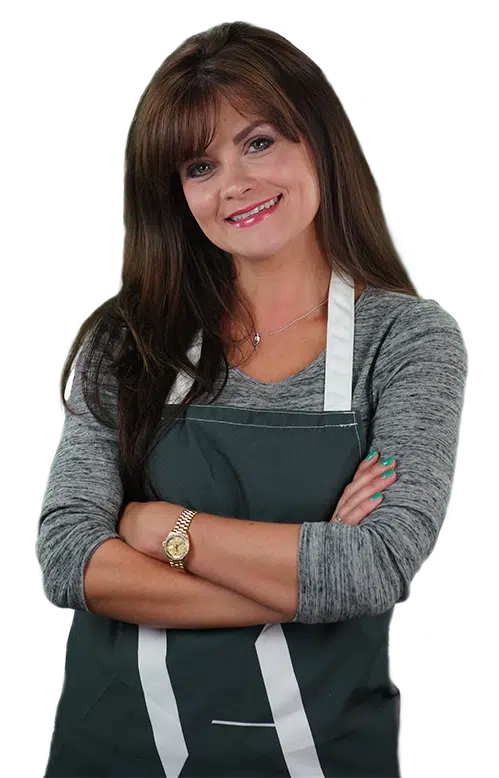
Victoria trained in beauty therapy at City College Norwich, worked in a busy spa, and began teacher training at nineteen. She holds a Cert Ed, a Teacher Assessor Award and a BA (Hons) in Inclusive Practice and Education, and lectured in further education colleges before founding Next Step Beauty in 2008.
She still demonstrates the techniques in the nail course videos herself, and she is personally involved, with the tutor team, in marking assessed work and in the private student groups.
“When I founded Next Step Beauty in 2008, my goal was simple—to make beauty education accessible and transformative for women worldwide. Today, with more than 100,000 students, I’m proud of the thriving community we’ve built. Your success is our success, and I can’t wait to see where your beauty journey takes you next!”
— Victoria Arpels, Founder & CEO
Awards
Students, In Their Own Words
Three people who started where you are now. None of them are actors and none of these were written by us.
Student Success Stories – Kyler Soanes
Thirteen years supporting children and adults with learning disabilities, then a change of direction. Four years on, Kyler runs her own salon from home.
Student Success Stories – Jessica Murray
Jessica came to us with no beauty experience at all and, by her own account, extremely nervous. She now has a cabin in her garden where she sees her own clients.
Student Success Stories – Samantha Fourie
“I have loved training with Next Step. Everything from booking to qualifying has been a simple and pain free experience.”
Where To Start
If you are not sure which course fits, start with the area rather than the course. Each one explains what you will learn, how the work is assessed and what you will need to practise on.