


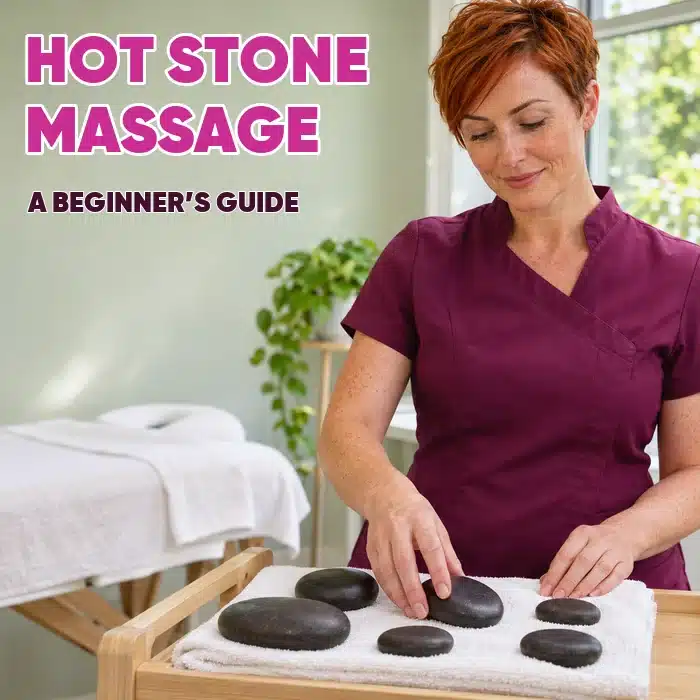
What is hot stone massage? It is a massage treatment that combines smooth, heated stones with hands-on massage techniques. The therapist works with the stones as part of a planned routine, while checking temperature, pressure and the client’s comfort. If you are considering learning it, understanding heat safety matters just as much as learning the movements.
What is hot stone massage like in practice?
The stones are warmed in equipment designed for the treatment. A trained therapist uses them alongside massage strokes, rather than simply arranging stones on someone’s back. Handling the stones, managing warmth and moving smoothly between techniques are skills to learn and practise.
Compared with a hands-only routine, hot stone massage adds equipment preparation, temperature monitoring and stone cleaning to the appointment. Think of those jobs as part of the treatment, not tasks to squeeze in afterwards. A calm-looking treatment still needs careful organisation.
Safety: temperature and contraindications
Heat is not something to judge from a photograph or a single temperature quoted online. Follow your training and the equipment manufacturer’s instructions, taking account of the individual client. Excessive heat can cause burns: Ellisons’ stone massage training manual warns about this and describes protective material between the skin and stones used for placement.
The UK National Occupational Standard for thermal massage includes consultation, informed consent, frequent temperature checks and monitoring the client’s skin and wellbeing. Clients should understand what to expect and be able to tell you immediately if anything feels uncomfortable. Adjusting pressure and checking comfort continue throughout the routine.
A contraindication is a reason a treatment may be unsuitable or need further assessment. Medical history, medicines, skin concerns and sensitivity to heat all belong in the consultation. Reduced sensation or difficulty regulating body temperature can make heat particularly concerning. Nottinghamshire Hospice’s clinical guidance highlights these cautions; its patient-care protocol is not a universal salon treatment checklist.
Learn when to adapt, postpone or decline treatment and when to refer to an appropriate healthcare professional. Work within your competence and insurance conditions. This overview cannot replace treatment training or an individual suitability assessment.
Who should learn hot stone massage?
It may interest you if you are exploring massage as a new skill or want to add a different technique to your existing practice. Start by comparing what you want to learn: a hands-only body routine, work with heated stones, or several complementary treatments. Our massage course range is a useful place to compare those options.
Before enrolling, check the course content, equipment you will need and how you will make time to practise. Our guide to how online massage courses work explains the learning process in more detail. For example, setting aside time to prepare and clear your workspace is more realistic than planning only for watching a lesson. Write down questions about handling or safety while you study, so you can seek guidance before proceeding.
Do I need a body massage qualification first?
No previous massage qualification is required to enrol on Next Step Beauty’s Hot Stone Massage Course. It is open to complete beginners and covers foundation knowledge as well as the treatment. Body massage is a complementary learning option, not an NSB entry requirement for this course.
Course entry and professional insurance are separate matters. Before offering paid treatments, arrange suitable cover for the treatment and your circumstances; enrolment alone does not put a policy in place.
Take your next step
Explore the Hot Stone Massage Course content and online learning format, including theory and practical demonstrations. If you are unsure which massage course fits your plans, ask our team for course guidance. You can start with a clear understanding of what you will study and what you will need to practise.
